Laura C. Stevenson
A Writer in Vermont
Young Adults
Laura has two daughters, Kate and Meg. When they were little, she told them stories almost every day. A year or two after Laura and her husband divorced, Kate elected to live in Santa Barbara with her father and stepmother -- but what would happen to the stories? So Laura said she would write a story and send it to Kate in installments. The result was "Kate's Book" long before it became Happily After All. While Kate's book was still struggling along, Meg was given a social studies assignment to design an island. It was a great island, but it had no history - and so Laura offered to give it one. "Meg's Book" became The Island and the Ring.
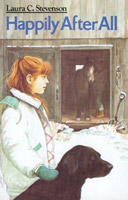
Happily After All
"Using the rugged Vermont mountains as her backdrop, Stevenson weaves a rich tapestry, colored with adventure and textured with emotions. Her descriptions are simple and remarkably clear; her characterizations are sharply defined. Although horse lovers in particular will be drawn to this story, others will be touched by its honesty and warmth."
—Publishers Weekly
"A beautifully told tale ... The characters are charmingly imperfect . . ."
—Voya
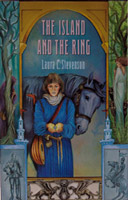
The Island and the Ring
"The story is classic fantasy and romance told in a refined tone that will appeal to subtle tastes. The lean but hyper-visual narrative feeds the reader's imagination while the dialogue effortlessly imparts deep philosophy."
—Publishers Weekly
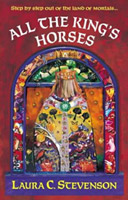
The heartbreaking decline and deaths of three beloved family friends provoked Laura to write a fantasy about Alzheimer's Disease, whose victims gradually lose every dignity except the dignity of being loved.
All The Kings Horses
"With one bound - vivacity of imagination hand-in-hand with clear-cut, lucid writing - Laura C. Stevenson has subsumed an "unspeakable" subject into the stuff of a teenage novel full of power, excitement, pertinent observation, humour (the book is anything but gloomy) and sheer readability, which invites discussion and promotes greater understanding."
—Carousel
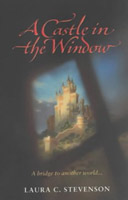
Laura's experiences with her own minor dyslexia and her history of teaching students with learning disabilities resulted in a study of dyslexia and denial.
A Castle in the Window
"A novel about music, reading, learning, facing up, individuality ('First of all,' says [Aunt] Joan, 'normal does not mean right'), and the nurturing of potential; serious, mysterious, absorbing, written with wit and tough-minded sensitivity."
—Carousel